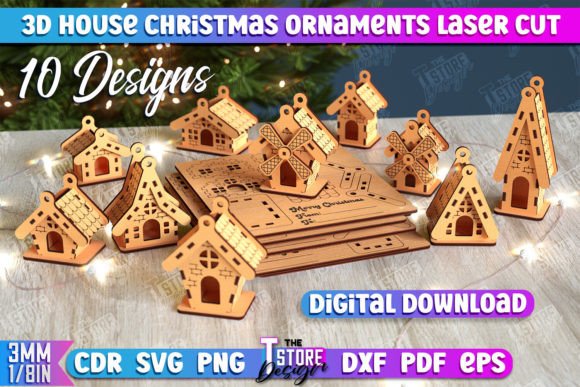
3D Christmas House Bundle DIY Model Review
When I first opened the 3D Christmas House Bundle DIY Model, my immediate thought wasn't about the file format or the stitch count, but rather the atmosphere it conjures. As a designer who has spent years testing embroidery files for real-world applications, I know that the difference between a design that looks great on a screen and one that holds up in a finished product often comes down to structural integrity and thematic clarity. This bundle immediately signals a shift from standard flat holiday motifs to something with depth and architectural charm. It feels less like a generic clipart vector and more like a curated set of assets ready to build a cohesive brand identity for a winter collection.
The "Winter Amp" categorization suggests an energy boost for seasonal projects, and visually, this is exactly what the design delivers. The concept of a house rendered in a 3D style implies layers, shadows, and dimensionality that can transform a simple piece of fabric into a tactile story. For the Etsy seller or boutique owner looking to stand out in a crowded marketplace, this kind of visual personality is gold. It moves beyond the typical snowflake or reindeer cliché and offers a cozy, narrative-driven aesthetic that resonates deeply with customers seeking personalized gifts or high-quality home decor.
From Digital File to Finished Product: A Real-World Scenario
Let's imagine a practical scenario where I decided to integrate the 3D Christmas House Bundle DIY Model into a custom order. The client wanted a limited run of premium kitchen towels for a holiday gift shop. My initial instinct was to place the design centrally on a cream-colored flour sack towel. However, before committing to the production run, I had to consider how the 3D elements would translate through the needle.
In this specific application, the design shines because the implied depth adds value without overwhelming the fabric. Unlike a dense fill stitch that might feel stiff on a soft cotton towel, a well-executed 3D effect using varying stitch densities can mimic the texture of shingles, snow accumulation, and brickwork. When I stitched a test sample, the contrast between the lighter threads used for the "snow" highlights and the darker threads for the "structure" created a subtle relief that caught the light beautifully. Customers handling the final product would feel that extra dimension, reinforcing the perception of a handmade, artisanal item rather than a mass-produced commodity.
This same logic applies when adapting the design for custom apparel, such as a heavy-weight sweatshirt. The architectural nature of the house provides a solid focal point that anchors the garment. On a tote bag, which is often made of canvas or denim, the design offers a robust graphic that withstands the wear and tear of daily use. The key here is understanding that the 3D Christmas House Bundle DIY Model isn't just an image; it is a structural blueprint for your stitching process. It invites the embroiderer to think about how light interacts with the thread, turning a flat surface into a scene.
Strategic Placement and Fabric Considerations
While the design is versatile, a professional review must address where it thrives and where it might struggle. The 3D aspect relies heavily on stitch density and layering to create the illusion of volume. Therefore, placing this design on small hoop sizes or highly textured fabrics requires caution. If you attempt to stitch intricate 3D details onto a rough burlap or a very thin, stretchy jersey knit, the risk of distortion increases significantly. The stabilizer choice becomes critical here; a cut-away stabilizer is likely necessary to support the weight of the multi-layered stitches, especially if the final product will undergo frequent washing.
I also need to highlight the importance of thread color selection. The success of the 3D effect is entirely dependent on the contrast between the shadow and highlight threads. On dark fabric backgrounds, the lighter threads pop effectively, creating a glowing effect against the night sky. However, on black or navy materials, ensure that the lighter threads have enough coverage to prevent the background color from bleeding through. Conversely, on light fabrics, the darker structural lines provide definition, but you must ensure the satin stitch edges are clean to avoid a "muddy" look.
For those considering this for commercial embroidery projects, such as embroidered patches or cap branding, the layout of the 3D Christmas House Bundle DIY Model needs to be scrutinized. Caps present a curved surface that can flatten out complex designs. While the house shape is generally forgiving, tiny lettering or minute decorative accents within the 3D structure might get lost or distorted during the tensioning process on a curved hat. In these cases, simplifying the detail level or resizing the design to fit the curvature of the cap is essential for maintaining professionalism.
Elevating Brand Consistency and Customer Trust
In the world of digital product sellers and craft business owners, consistency is king. Using a design like the 3D Christmas House Bundle DIY Model allows for a unified look across various product lines. Whether you are creating printable mockups for an Etsy listing, designing a holiday greeting card, or producing a line of baby clothes, the visual language remains consistent. This cohesion builds trust with buyers. When a customer sees a high-quality, dimensional design on a pillow cover and then recognizes the same artistic style on a matching apron, they perceive a level of care and attention to detail that translates directly to perceived value.
The design also enhances the giftability factor. A 3D embroidered house evokes feelings of warmth, shelter, and nostalgia. These are powerful emotional triggers for holiday shoppers. By offering a finished product that captures this mood, you are selling an experience, not just a textile. The visual appeal of the 3D element makes the item feel unique and special, encouraging higher price points and repeat business. It transforms a standard embroidery project into a centerpiece for a home or a cherished keepsake.
Essential Designer Notes for Execution
Before you rush to load this file into your machine, there are several technical steps every experienced designer should take. First and foremost, always test the design on scrap fabric that matches your intended final material. This step is non-negotiable when working with complex 3D effects. You need to verify that the stitch density is appropriate for the fabric weight and that the thread colors provide the necessary contrast.
Review the stitch types closely. The design likely utilizes a combination of satin stitch for outlines, fill stitch for shading, and running stitch for delicate details. Ensure that your machine settings align with these requirements. Check whether the design works for both personal and commercial projects by reviewing the licensing terms provided with the file. Confirming these details protects your small shop from legal issues and ensures you can confidently sell the finished items.
Additionally, inspect the small details and dense stitch areas under magnification. Sometimes, digital previews smooth over potential snag points or overlapping threads that could cause puckering. Test the design in black and white mockups to see if the tonal values hold up without the distraction of color. Compare how the design looks on both light and dark fabric backgrounds to determine the most versatile presentation strategy. Finally, confirm the hoop size requirements; while the bundle may offer scalable options, ensuring the design fits your specific hoop dimensions will save time and frustration during production.
Ultimately, the 3D Christmas House Bundle DIY Model represents a strong asset for anyone looking to elevate their embroidery portfolio. It bridges the gap between digital creativity and physical craftsmanship, offering a template that supports both hobbyists and professional entrepreneurs. By approaching the project with a focus on fabric compatibility, thread selection, and proper stabilization, you can unlock the full potential of this design, creating finished products that are not only visually stunning but also durable and market-ready.